
CIRP is the world leading organization in production engineering research and is at the forefront of design, optimization, control and management of processes, machines and systems.
The Academy has restricted membership based on demonstrated excellence in research and has some 600 worldwide academic and industrial members (read more)
The Vision of CIRP
To promote research and development among its members from Academia and Industry to contribute to environmentally sustainable global prosperity and well being of society (read more)
The Mission of CIRP
To develop the highest level international network of eminent Researchers and Industrialists for the purpose of marshalling their knowledge and insights
The membership is divided into five categories:
Fellows, generally directors or former directors of major production engineering laboratories;
Associate Members, research workers with recognized credentials who have the potential to become active CIRP contributors and collaborators;
Honorary Fellows, former Fellows who have gained outstanding merit by their activity and devotion to CIRP;
Fellows (Emeritus), active Fellows about to retire nominated for life at their request;
Corporate Members, companies or industrial research institutions that support the aims of CIRP and maintain an interest in the organization's activities also giving scientific and technical contributions.
In addition, CIRP offers a program for young distinguished researchers:
Research Affiliates Program
A program to temporarily affiliate young researchers (RAs) who contribute to CIRP activities and have the potential to further contribute to CIRP, e.g. by becoming Associate Members in the future. In case RAs change to industry, they might wish to bring their company to CIRP as Corporate member.
(please log in).
The Scientific and Technical Committees (STCs) are the groups responsible for coordinating the collaborative research projects run by CIRP. The knowledge generated in each field of activity is distributed by publications and conferences to the manufacturing community at large. The main activities of the STCS are:
- Collecting and analysing bibliographies to document the state-of-the-art in particular areas of manufacturing;
- Publishing synthesis reports on important technical problems;
- Organizing seminars and meetings on specialist topics;
- Preparing internationally accepted terminology to aid understanding and promote more precise scientific definitions;
- Contributing to the work of the International Standardization Organization (ISO);
- Surveying the state of the art of research being carried out in different laboratories in the world;
- Studying and promoting the development of important new techniques and technologies;
- Organizing cooperative research projects, comparative testing, standardization of methods etc.).
The STCs especially promote and give moral support to advanced research in new fields. They establish research goals and, when appropriate, prepare recommendations for the consideration of official and other bodies concerned with education and research.
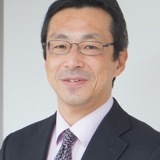
Chairman: Prof. Yasushi Umeda
Vice-Chairman: Prof. Lihui Wang
Secretary: Prof. Sebastian Thiede
STC A deals with the two areas Life Cycle Engineering and Assembly.
Life Cycle Engineering covers Life Cycle Assessment of products, manufacturing processes and systems, decision support methods and tools for developers and managers concerning the three sustainability dimensions ( environment, society and economy) and product Life Cycle Management, EOL decision making such as disassembly, reuse and recycling.
Assembly covers:
Life cycle maintenance services, assembly technology, design for assembly, micro-assembly, structure and organization of assembly processes/systems considering all relevant aspects
CIRP Members: to see the Agendas and Minutes, you must log in.

Chairman: Dr. Pedro Arrazola
Vice-Chairman: Prof. Volker Schulze
Secretary: Prof. Jose Outeiro
STC C deals with processes and techniques used to shape components by material removal (turning, milling etc.), including the processes of chip formation, the physical laws governing the wear of cutting tools and the factors influencing surface finish.
CIRP Members: to see the Agendas and Minutes, you must log in.

Chairman: Prof. Nabil Anwer
Vice-Chairman: Prof. Ang Liu
Secretary: Prof. Tomohiko Sakao
Design is an integral part of manufacturing addressing issues ranging from its philosophical roots, through design theory and methodology, digital design support techniques and tools, to engineering design practice. These issues typically include:
• Principles, methodologies, techniques, creativity, organisation, processes and quality aspects of designing components, products, machines, manufacturing systems, product-service systems, and socio-technical systems.
• Advanced digital methods for design (such as modelling, simulation, optimisation, and decision making) including digital foundations and digital platforms such as: Product Lifecycle Management (PLM), Computer Aided Design (CAD) and Computer Aided Engineering (CAE) systems with particular interests in AR/MR/VR (Augmented Reality/Mixed Reality /Virtual Reality) and AI (Artificial Intelligence) techniques, Computer Aided Tolerancing, Digital Twins, and Model-Based Systems Engineering.
• Engineering and modelling techniques and tools for advanced manufacturing systems and processes such as additive and hybrid manufacturing as well as methods for manufacturing system design.
• Tools and methods for efficient and effective engineering design for X practices such as sustainability and resilience, as well as engineering design education and training.
CIRP Members: to see the Agendas and Minutes, you must log in.
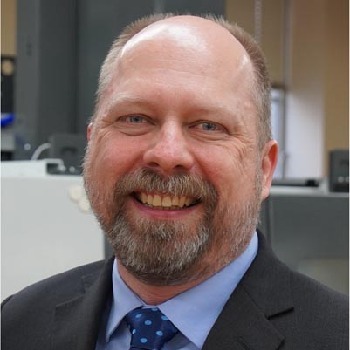
Chairman: Prof. Frank Pfefferkorn
Vice-Chairman: Prof. Adam Clare
Secretary: Dr. Wessel Wits
STC E deals with research into material removal, additive, and hybrid processes of a physical, physico-chemical or chemical nature, such as electro-discharge machining (EDM), electrochemical machining (ECM), the use of high energy laser, electron and ion beams, 3D printing, and biomanufacturing.
CIRP Members: to see the Agendas and Minutes, you must log in.

Chairman: Prof. Stefania Bruschi
Vice-Chairman: Prof. Brad Kinsey
Secretary: Prof. Marion Merklein
STC F focuses on processes where the final shape or objective is achieved through plastic deformation of metals, or metal-based composites and hybrids. Topics include plasticity theory applied to industrial forming, tribology and material characterization aspects, process design, optimization, modelling and simulation, sensing and in-process monitoring, digital twins and AI-driven process control, sustainable lightweight design, joining by forming, and plastic deformation-based additive manufacturing, including integration into hybrid processes.
CIRP Members: to see the Agendas and Minutes, you must log in.

Chairman: Prof. Carsten Heinzel
Vice-Chairman: Assoc. Prof. Eraldo Da Silva
Secretary: Prof. Peter Krajnik
STC G deals with research into material removal processes using abrasive grains such as grinding and finishing, attention is largely focus on the mechanism of finishing, the integrity of finished surfaces and the economics of abrasive processes.
CIRP Members: to see the Agendas and Minutes, you must log in.

Chairman: Prof. Michael Zaeh
Vice-Chairman: Prof. Kaan Erkorkmaz
Secretary: Prof. Hans-Christian Möhring
STC M deals with machine systems including machine tools, robots, measuring machines and handling equipment, for optimised technical and economic performance including:
- Research, design, development, manufacture and optimised application of production machine systems
- Characterization of machine system performance such as quasi-static and dynamic behaviour, accuracy, ergonomics, efficiency, cost of ownership and suitability for use in FMS and CIM systems
- Design for optimised performance of sub-systems and components such as structures, guideways, spindles, servo actuators, displacement transducers, sensors, servo control theory and systems (state space), CNC systems, adaptive control, expert systems and artificial intelligence applied to advanced machine systems
- Application of new materials, design for higher machine accuracy capabilities including 2D/3D error compensation, thermal drift reduction and control, tool setting and tool wear compensation etc.
- Modelling, simulation, modal analysis, testing and metrological calibration of machine systems
- Terminology, symbols and standards for production machine systems.
CIRP Members: to see the Agendas and Minutes, you must log in.

Chairman: Prof. Tullio Tolio
Vice-Chairman: Prof. Aydin Nassehi
Secretary: Prof. Toshiya Kaihara
STC O addresses optimised design, modelling, orchestration, management and operation of sustainable, societally-conscious production systems.
Production systems encompass work cells, lines, factories, networks, service systems and other value-generating industrial organisations.
Research areas include:
- Conceptualisation and shaping of innovative evolving production systems
- Orchestration, management and operation of production systems and networks
- Organisation of human-centric production systems
- Optimisation of circular production systems
- Digitalisation in production systems”
CIRP Members: to see the Agendas and Minutes, you must log in.

Chairman: Prof. Yasuhiro Takaya
Vice-Chairman: Prof. Edward Morse
Secretary: Prof. Jose Yagüe-Fabra
STC P deals with research, design, and development of methods, instruments, sensors, transducers and complete metrology systems and application of them to manufactured products and equipment for the efficient control of quality in production processes and manufacturing systems including:
- the metrology of comprehensive geometrical quantities such as length, angle, displacement, profile and surface topography including surface integrity applied as closely as possible to the point of manufacture,
- design and uncertainty budgeting for optimized control strategies in measurement instruments and precision manufacturing equipment, including precision machine tools and components, etc.,
- sensors for physical and mechanical quantities such as position, velocity, acceleration, force, temperature, pressure etc. for process quality monitoring and control,
- nano-metrology for application to nanotechnology and nanomanufacturing processes and machines,
- responsibility for surveying emerging manufacturing technologies, processes and equipment for identifying trends, and relevant research and development needs in precision engineering and metrology (e.g., nanotechnology applications, additive manufacturing),
- metrological calibration of machines, sub-systems and instruments for traceability as well as for performance improvement through various geometrical and thermal error compensation strategies,
- terminology, symbols and standards for precision engineering and metrology.
CIRP Members: to see the Agendas and Minutes, you must log in.

Chairman: Prof. Han Haitjema
Vice-Chairman: Assoc. Prof. Guido Tosello
Secretary: Dr. Daniel Meyer
STC S deals with research into the geometrical, physical and chemical properties of the workpiece surface in relation to function, production processes and metrological assessment, including:
- Techniques and conditions for measurement and characterisation of surface topography
- Surface integrity, including surface hardness, surface micro-cracks, sub-surface damage, residual stresses
- Terminology, symbols and standards for surfaces
CIRP Members: to see the Agendas and Minutes, you must log in.
 |
 |
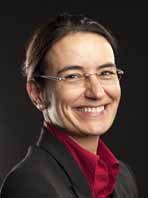
Prof. G. Lanza and Prof. J. Sutherland, Co-Chairs
The Cross-STC Group gathers all the fields of the ten Scientific Technical Committees (STC) in a general meeting for Fellows and Associate Members only, including discussions and decisions on new Collaborative Working Groups (CWG), future Cross-STC Keynote papers and their supervisation up to the publication, future White papers, etc...
CIRP Members: to get access to the Agendas and Minutes, you must log in
STCs are invited to initiate Collaborative Working-Groups (CWG) on the basis of common interests in a particular subject.
New CWG initiatives should be forwarded with the Checklist (available in the members' Dashboard) to the Cross-STC Chairs (presently Profs. G. Lanza and J. Sutherland) who will submit them to the Cross-STC Group meeting (for Members only) during the CIRP meetings twice a year.
The current Collaborative Working-Groups are:
Absolute Sustainability in Manufacturing
Duration: Aug.2026 - Feb.2029
Chair: Prof. Michael Hauschild
Vice-Chair: Prof. Sami Kara
Secretary: Prof. Sebastian Thiede
Ethics in Manufacturing
Duration: Feb.2024 - Aug.2026
Chair: Prof. Rajkumar Roy
Manufacturing in a global data space
Duration: Feb.2026 - Aug.2028
Chair: Prof. Thomas Bergs
Quantum Computing for Production
Duration: Aug.2026 - Feb.2029
Chair: Prof. Steffen Ihlenfeldt
Vice-Chair: Prof. Markus bambach
Secretary: Prof. Jian Cao
Past Collaborative Working-Groups with Minutes online (Access)
CIRP Members: to get access to the Agendas and Minutes, you must log in

Chairman: Dr. Luis Uriarte (Corporate member)
Vice-Chairmen: Dr. Youichi Nonaka (Corporate member) / Prof. Kaan Erkorkmaz (Council Fellow)
Secretary: Dr. Serafettin Engin (Corporate member)
The Corporate Members Advisory Group allows to focus the attention of CIRP members on specific industrial problems as well as on new research topics.
Corporate Industry Members are very valuable to the entire CIRP Community. They give feedback to ongoing and planned scientific work and can also give CIRP academic members recommendations for future industry-related research needs. On the other hand they establish networks within the scientific community and can receive advice and help for their current problems. One platform for this synergistic exchange is currently achieved at the Corporate Members Advisory Group (CMAG) meetings which are held during the CIRP General Assembly (GA) and during the CIRP Winter meetings in Paris. During the August General Assembly, a special lunch is reserved to the Corporate members where a friendly meeting with the CIRP officers and STC chairmen encourages a fruitful exchange of opinions and experiences.
Unlike for members from academia it is very hard for representatives from companies, industrial research labs, and service providers, to place papers in Vol.1 of the CIRP Annals. This is due to the high requirements regarding the scientific standard of papers in Vol.1. Therefore, CIRP Council and the Editorial Committee (EC) have approved a new route to accept CIRP Industrial Technical Papers, to allow their presentation at a CMAG paper session during a GA, and to publish them in a special section on our CIRP website:
Link to the ITP papers online (you must be logged in to get to this members' area)
Link to the procedure to propose an ITP paper (you must be logged in to get to this members' area)
CIRP Members: to get access to the Agendas and Minutes below, you must log in
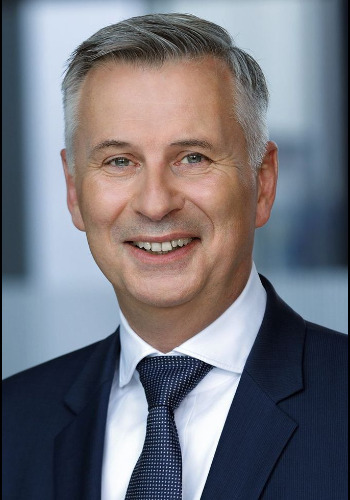
Chair: Professor Robert Schmitt
Vice-Chair: Dr. Marcello Urgo
Secretary: Dr. Florent Laroche
Editor-in-Chief of the CIRP Novel Topics in Production Engineering (CNTPE) and Editor-in-Chief of the CIRP Encyclopedia of Production Engineering: Prof. Tullio Tolio
The Terminology Committee carries the responsibility for publication of the CIRP dictionaries on Advanced Manufacturing Engineering, the CIRP Encyclopedia of Production Engineering and the new CIRP Novel Topics in Production Engineering (CNTPE).
They cover definitions and terminology for manufacturing processes, machines, tooling, materials and systems formulated by the Scientific Committees (STC).
The new CIRP Novel Topics in Production Engineering (CNTPE) represent the natural extension of the CIRP Encyclopedia of Production Engineering and the CIRP Dictionaries of Production Engineering. CIRP members and Research Affiliates have full access from the "CIRP Publications" heading in their Dashboard.
These online platforms provide authoritative, exhaustive, fast and easy access to terms, definitions and whole set of information in the field of production engineering (see in our "Publications").
CIRP Members: to get access to the Agendas and Minutes, you must log in

Chairman: Dr. Benjamin Montavon
Vice-Chairman: Dr. Haizea Gonzalez Barrio
Secretary: Dr. Florian Stamer
The aim is to create a sustainable network affiliated with CIRP to promote and to develop upcoming young researchers in production engineering.
CIRP Research Affiliates will create an information exchange network on internet, exchange and discuss research results, create joint research projects, and get easy access to CIRP members.
To get access to the Agendas and Minutes, you must log in
CIRP also publishes the trilingual Dictionaries of Production Engineering and the Encyclopedia of Production Engineering.
Currently the CIRP Annals and the Journal of Manufacturing Science and Technology are published by Elsevier, while Springer Verlag publishes the Dictionaries of Production Engineering and the Encyclopedia of Production Engineering.
Articles about corporate members